Steel Containers remain essential to global cargo movement, construction logistics, storage, and industrial supply chains. China is especially important in this market. The World Steel Association reported that China produced approximately 1.005 billion tonnes of crude steel in 2024. That industrial scale supports competitive container manufacturing, steel processing, welding, coating, and export infrastructure.
UNCTAD’s Review of Maritime Transport 2024 confirms that maritime transport carries over 80% of global merchandise trade by volume. Its data also highlights continuing growth in container vessel capacity and equipment demand. In this environment, buyers need more than a low factory price. They must examine steel grade, corner-casting accuracy, welding quality, coating thickness, load ratings, inspection records, and after-sales support. Details matter.
John Fossey, a container equipment specialist and former Drewry analyst, has emphasized that “equipment availability is central to reliable container shipping.” This principle applies directly to international procurement. A supplier may offer excellent specifications, yet struggle with production consistency or replacement parts. Another may provide strong export experience but limited customization. These differences are easy to miss in a short quotation.
This guide introduces China’s top 10 Steel Containers suppliers for global buyers. The selection considers manufacturing capability, product range, certifications, export experience, customization, and customer-service capacity. It is not an absolute ranking. Buyer requirements change by cargo type, destination, climate, and compliance rules. Some information may also require direct verification, because supplier capabilities and certifications can change. Careful audits, sample inspections, and documented contracts remain necessary before purchase.
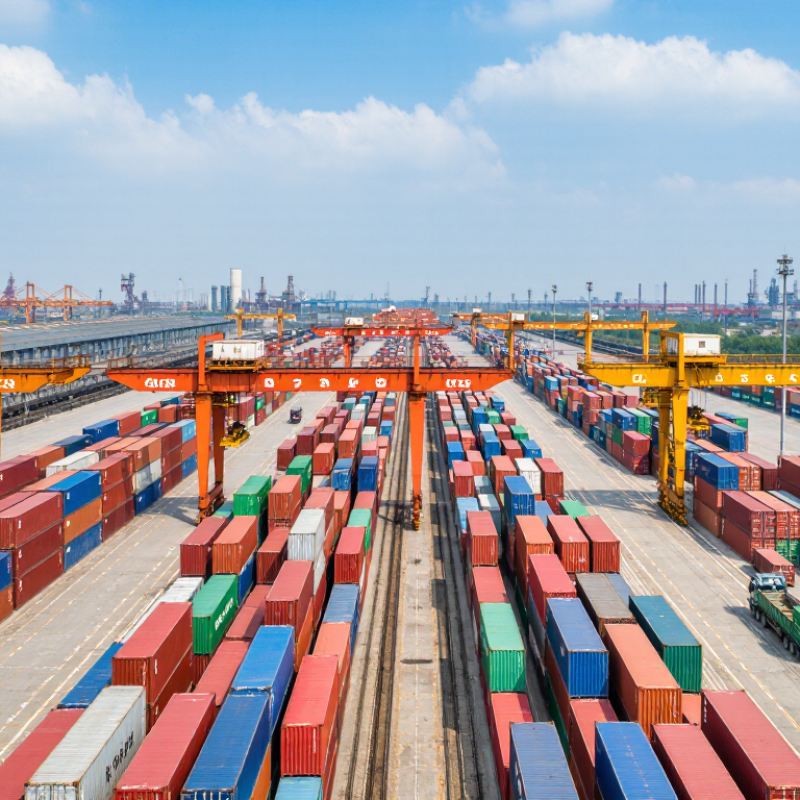
Steel containers are durable enclosures made from treated steel panels, frames, doors, and reinforced floors. They protect cargo, equipment, and materials during transport or storage. Common designs support lifting, stacking, ventilation, and repeated handling. Their value becomes clear at busy ports, where forklifts and cranes demand strong corner fittings. A well-built container should resist rain, impact, corrosion, and daily movement. Small defects matter.
Global buyers often choose Chinese suppliers because they offer broad production capacity and flexible customization. Buyers can request specific dimensions, door layouts, insulation, locking systems, or surface coatings. Experienced factories usually provide drawings, material records, welding inspections, and load-test information. Third-party inspections can verify these claims before shipment. However, a low quotation may hide thinner steel, weaker paint, or incomplete accessories. I have found that clear specifications prevent more problems than fast negotiation.
Tips: Define the intended cargo, loading method, weight, climate, and service life before asking for prices. Request steel grades, coating details, weld standards, inspection photos, and replacement-part policies. Check whether the supplier can provide samples or a prototype. Do not judge quality from polished photographs alone. A container may look excellent and still fail at the hinges or floor joints. Review drawings carefully, because one missing measurement can create costly modifications.
The following table presents anonymized supplier capability profiles rather than company names or brand data. Technical specifications are based on commonly used ISO freight-container requirements, including ISO 668, ISO 1161, ISO 1496-1 and CSC safety requirements.
| Profile | Primary Product Focus | Typical ISO Size | External Dimensions (L × W × H) |
Approximate Internal Volume | Typical Maximum Gross Mass | Common Steel Construction | Buyer-Relevant Capability | Typical Compliance Basis | Best-Fit Buyer Segment |
|---|---|---|---|---|---|---|---|---|---|
| Supplier Capability 01 | General-purpose dry freight containers | 20 ft standard | 6,058 × 2,438 × 2,591 mm | Approximately 33.2 m³ | Up to 30,480 kg | Weathering steel body with steel doors and hardwood or composite flooring | High-volume production for standard international cargo | ISO 668; ISO 1496-1; ISO 1161; CSC eligibility where approved | Small and medium cargo loads, machinery, packaged goods |
| Supplier Capability 02 | General-purpose dry freight containers | 40 ft standard | 12,192 × 2,438 × 2,591 mm | Approximately 67.7 m³ | Up to 30,480 kg | Weathering steel panels with reinforced corner posts and cross-members | Efficient cost per cubic metre for long-distance shipping | ISO 668; ISO 1496-1; ISO 1161; CSC eligibility where approved | Retail cargo, furniture, manufactured goods and export consolidation |
| Supplier Capability 03 | High-cube dry freight containers | 40 ft high cube | 12,192 × 2,438 × 2,896 mm | Approximately 76.3 m³ | Up to 30,480 kg | Weathering steel construction with increased internal height | Greater cubic capacity without increasing the footprint | ISO 668; ISO 1496-1; ISO 1161; CSC eligibility where approved | Lightweight, bulky or high-volume products |
| Supplier Capability 04 | Open-top containers | 20 ft open top | 6,058 × 2,438 × 2,591 mm | Approximately 32 m³ | Up to 30,480 kg | Steel walls with removable roof bows and tarpaulin cover | Top loading for cargo that cannot pass through standard doors | ISO 1496-1 dimensional and structural principles; CSC where approved | Scrap metal, stone, timber, industrial equipment and oversized cargo |
| Supplier Capability 05 | Flat-rack containers | 40 ft flat rack | 12,192 × 2,438 × 2,591 mm | Open platform design | Common ratings range from 34,000 to 45,000 kg, depending on design | Heavy-duty steel frame with fixed or collapsible end walls | Reinforced lashing points for heavy and over-dimensional cargo | ISO 668; ISO 1496-1; ISO 1161; project-specific load testing | Construction machinery, generators, steel products and project cargo |
| Supplier Capability 06 | Side-opening containers | 20 ft or 40 ft | 6,058 or 12,192 × 2,438 × 2,591 mm | Approximately 33.2 or 67.7 m³ | Usually up to 30,480 kg | Steel body with additional side-door reinforcement | Full or partial side access for rapid loading and unloading | ISO dimensional requirements; structural design subject to door configuration | Retail display materials, long products and warehouse distribution |
| Supplier Capability 07 | Insulated and temperature-controlled containers | 20 ft or 40 ft | ISO-compatible external footprint | Reduced by insulation and equipment installation | Depends on refrigeration equipment and payload configuration | Steel exterior with insulated wall, floor and ceiling panels | Thermal protection and optional active temperature control | ISO 1496-2 principles for refrigerated containers; electrical safety requirements | Food, pharmaceuticals, chemicals and temperature-sensitive cargo |
| Supplier Capability 08 | Special-purpose storage containers | 20 ft standard | 6,058 × 2,438 × 2,591 mm | Approximately 33.2 m³ | Up to 30,480 kg for suitable ISO-rated designs | Weathering steel with ventilation, personnel doors or shelving options | Customization for secure on-site storage and temporary facilities | ISO-based frame dimensions; local building and safety codes may also apply | Construction sites, mining, agriculture and emergency storage |
| Supplier Capability 09 | Tank containers for bulk liquids | 20 ft tank frame | ISO-compatible 20 ft footprint | Common capacities range from 14,000 to 26,000 litres | Determined by tank design, liquid density and transport regulations | ISO steel frame with stainless-steel or specialized tank vessel | Designed for controlled transport of bulk liquid products | ISO 1496-3; applicable pressure-vessel, dangerous-goods and CSC requirements | Food ingredients, chemicals, oils and liquid industrial materials |
| Supplier Capability 10 | Modified and project-specific containers | 20 ft, 40 ft or high cube | Based on the selected ISO frame | Depends on openings, equipment and interior fit-out | Must be recalculated after modification | Steel frame with engineered doors, windows, insulation or equipment mounts | Engineering support for customized logistics and industrial applications | ISO frame standards plus project drawings, load testing and local certification | Power systems, workshops, laboratories, offices and modular infrastructure |
Compare capabilities, not factory size alone. Check product range, welding methods, dimensional controls, and experience with your loading method.
Common options include dry freight, high-cube, side-door, open-top, and flat-rack containers. Some suppliers also produce refrigerated or insulated units.
Request steel grades, paint systems, payload limits, drawings, and certification requirements. Ask for production photos and material specifications.
Inspect welds, coating thickness, door alignment, seals, and corner castings. A poorly aligned door can delay loading at a busy depot.
Not always. A clean workshop does not prove consistent production. Inspect sample units and review previous repair records.
Ask for steel, coating, testing, packing, inland transport, export fees, and delivery terms. Confirm whether the price is FOB or CIF.
Request the loading port, transit estimate, free storage period, and demurrage rules. Check recent shipment references and inspection records.
Written warranty terms, spare-part availability, response times, and damaged-unit procedures should be clear. A promise without a deadline is weak.
I would not rely on it alone. A cheaper container may exclude fittings, use thinner panels, or omit important services.
Compare at least three identical specifications. Score price, delivery, quality, and support. The scoring sheet may reveal uncomfortable gaps.
Steel Containers are durable, reusable solutions for transporting, storing, and handling materials across many industries. Global buyers often consider Chinese suppliers because they can offer broad manufacturing capacity, flexible production volumes, competitive pricing, and customization for different dimensions, loading requirements, and operating environments. However, choosing the right supplier requires more than comparing quotations. Buyers should evaluate manufacturing experience, product range, quality-control procedures, factory capability, communication efficiency, and export experience.
A reliable purchasing process should also examine material grades, welding quality, corrosion protection, load performance, safety testing, and relevant certifications for the destination market. Buyers can compare suppliers by reviewing specifications, sample quality, production lead times, packaging, shipping terms, and total landed cost rather than focusing only on the unit price. Clear agreements on customization, inspection, warranty coverage, spare parts, and after-sales support can reduce risk and improve long-term cooperation. By assessing products and capabilities systematically, global buyers can identify dependable Chinese manufacturers and select Steel Containers that balance quality, compliance, delivery performance, and overall value.

 GuciRack