What Are China’s Top Medium Duty Storage Racks?

Time:2026-09-13 Author:Henry
0%

China’s medium-duty storage rack market offers practical solutions for warehouses, workshops, archives, and retail backrooms. The best systems are not chosen by appearance alone. Load capacity, beam length, shelf material, adjustability, and installation quality matter more.

This guide examines what makes China’s top Medium Duty Storage racks reliable in daily use. It considers common designs, including boltless shelving, adjustable steel racks, and multi-level storage systems. A strong rack should hold labeled cartons, spare parts, tools, or inventory bins without excessive movement. Smooth edges help protect workers and stored goods. Clear assembly instructions also reduce mistakes during installation.

Real warehouse conditions can be demanding. Dust collects on shelves. Forklifts may pass nearby. Uneven floors can affect stability. These details deserve attention. A supplier’s catalog is useful, but it cannot replace verified specifications, load testing, and direct communication. Ask whether stated capacity applies to each shelf or the complete bay. That difference is often overlooked.

Quality varies.

Experienced buyers should review steel thickness, surface coating, welding or connector design, and replacement-part availability. They should also confirm packaging methods, delivery schedules, and after-sales support. Certifications and test reports can strengthen confidence, but documents should match the actual product supplied. This overview may not identify one universal winner, because warehouse needs differ. A compact workshop may prefer flexible shelving, while a distribution facility may require denser storage and stronger frames. Careful comparison creates a safer, more efficient, and more dependable purchasing decision.
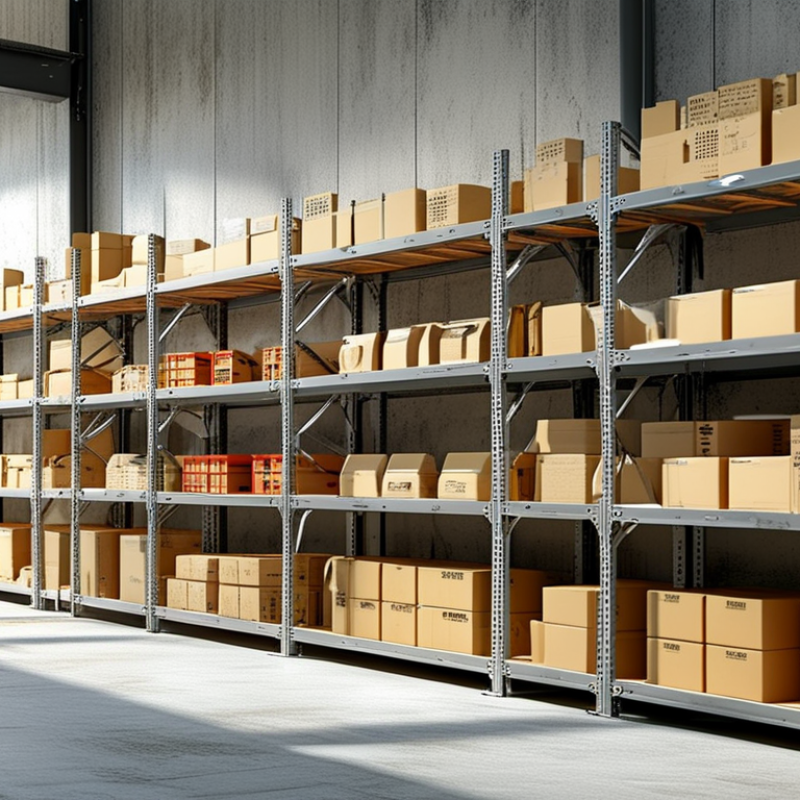
What Are China’s Top Medium Duty Storage Racks?

What Defines Medium-Duty Racks in China? Typical Loads of 200–800 kg per Level

What Are China’s Top Medium Duty Storage Racks?

In China, medium-duty storage racks commonly support 200–800 kg per level. This range suits cartons, plastic bins, spare parts, and hand-loaded materials. The load must be evenly distributed across the shelf surface. A concentrated load can stress beams, decking, and upright frames.

A practical rack assessment checks more than the advertised capacity. Inspect the steel thickness, beam connectors, shelf panels, floor condition, and anchoring method. Warehouse height and aisle width also affect the safest configuration. A rack rated for 800 kg may require stronger bracing and thicker panels than a 200 kg model. That distinction matters. Capacity labels should show whether the rating applies per level or to the entire bay.

Medium-duty systems are usually chosen for flexible storage and frequent picking. Boltless designs allow fast adjustment, while bolted structures can provide greater rigidity. In real warehouses, cartons are not always placed perfectly. Workers may push loads toward the front edge. This small habit can reduce stability over time. Regular inspections should look for bent beams, loose connectors, damaged paint, and uneven loading. I would also question any capacity claim without a clear test method or installation guide. The 800 kg figure sounds precise, but actual performance depends on rack spacing, materials, and assembly quality. Real installations are rarely perfect.

What Are China’s Top Medium Duty Storage Racks? - What Defines Medium-Duty Racks in China? Typical Loads of 200–800 kg per Level
Capacities are typical planning ranges for evenly distributed loads. Actual ratings depend on rack dimensions, steel specifications, beam connections, decking, floor conditions, and engineering calculations.
Rack Configuration Typical Load per Level Common Bay Width Typical Depth Typical Height Usable Levels Typical Applications Key Design Features
Basic Boltless Shelving 200–300 kg 900–1,200 mm 400–600 mm 1,800–2,400 mm 4–6 Cartons, tools, spare parts, archives, and small packaged goods Adjustable beam positions; usually assembled without welding at the installation stage; suitable for hand loading
Medium-Duty Panel Shelving 300–500 kg 1,000–1,500 mm 500–800 mm 2,000–3,000 mm 4–7 Warehouse cartons, hardware, electrical components, and maintenance inventory Steel panels or chipboard decking supported by adjustable frames and horizontal beams
Long-Span Shelving 400–800 kg 1,500–2,400 mm 600–1,200 mm 2,000–3,000 mm 3–5 Long cartons, bulky components, furniture parts, and irregularly sized goods Longer beams with reinforced supports; commonly accessed by hand or with a small step platform
Pallet-Compatible Medium-Duty Rack 500–800 kg 1,800–2,700 mm 800–1,100 mm 2,000–4,000 mm 2–4 Light pallets, plastic totes, returnable containers, and medium-weight unit loads Stronger upright frames, pallet-support beams, and wire mesh or steel decking; verify forklift requirements
Multi-Tier Manual Picking Rack 200–600 kg 900–1,500 mm 400–800 mm 3,000–6,000 mm 2–4 tiers Order picking, e-commerce inventory, apparel, small parts, and boxed products Walkways, stairs, handrails, and guardrails may be integrated; structural and fire-safety checks are required
Mezzanine-Supported Storage 300–800 kg Based on project layout Based on project layout 3,500–6,000 mm overall 1–2 elevated floors High-volume manual storage where floor space is limited Uses structural columns, deck panels, stairs, edge protection, and controlled access points
Mobile Medium-Duty Shelving 200–500 kg 900–1,200 mm 400–600 mm 1,800–2,400 mm 4–6 Archives, tool rooms, pharmacies, document storage, and compact stockrooms Shelves move on rails or mobile bases; floor loading, anti-tip protection, and aisle access must be assessed

Chinese Rack Types: Boltless, Longspan, and Multi-Tier Systems

Medium-duty storage racks help warehouses organize cartons, tools, spare parts, and packaged goods without excessive investment.

In practical warehouse inspections, three Chinese rack types appear often: boltless, longspan, and multi-tier systems. Each serves a different storage rhythm. The right choice depends on load weight, item size, handling equipment, and available ceiling height.

Boltless racks use interlocking frames and adjustable shelves, so workers can assemble them quickly. They suit lighter cartons and changing inventory. I value their flexibility. However, connections still need regular inspection, especially after relocation.

Longspan racks provide wider shelves for bulky containers, archive boxes, and irregular packages. Their open design improves visibility, but deep shelves may encourage unsafe overloading.

Multi-tier systems create several usable levels inside one vertical structure. They work well when floor space is limited and staff handle goods manually. Clear stairs, guardrails, toe boards, and suitable platform spacing are essential.

Do not treat extra height as free capacity.

Engineers should verify beam loads, upright strength, floor conditions, and local safety requirements before installation. Load labels should remain visible.

Some specifications are easy to overlook. A rack may support the stated weight only when loads are evenly distributed. I have seen plans fail because pallet dimensions were measured incorrectly.

That small mistake caused awkward gaps and blocked aisles. A reliable supplier should provide drawings, load calculations, installation guidance, and inspection records.

Still, users must confirm the details on site. Warehouses change, and rack performance depends on daily discipline.

How 1.5–3.0 m Heights and 600–2,000 mm Bays Affect Storage

Medium-duty storage racks become practical when height and bay width match human movement, carton size, and replenishment rhythm. At 1.5 m, pickers can often reach upper levels without powered equipment. At 2.0–3.0 m, vertical capacity improves, but access planning becomes more important. A 600 mm bay suits narrow cartons or separated stock-keeping units. A 2,000 mm bay handles larger loads, yet beam deflection and handling effort may increase. These are planning ranges, not universal specifications.

The 2024 MHI Annual Industry Report surveyed more than 1,000 supply-chain professionals. It found that 83% expect technology to become a competitive advantage within five years. That supports rack layouts prepared for barcode scanning, location discipline, and future automation. WERC’s 2024 DC Measures report treats order-picking accuracy near 99.5% as a leading benchmark. Poorly sized bays can weaken that target. Long bays encourage mixed cartons and visual errors. Short bays consume more uprights and aisle frontage.

On site, I would test one loaded bay before approving a full run. Place the heaviest carton at the lowest level. Keep fast movers between waist and shoulder height. At 3.0 m, confirm floor flatness, anchorage, sprinkler clearance, and safe access. ANSI MH16.1 emphasizes engineered design, rated components, and impact protection. Rack height alone never proves capacity. I have seen a clean CAD drawing fail because cartons were 80 mm wider than recorded. That mistake is easy to repeat. Re-measure the inventory.

Why Q235/Q355 Steel and 0.8–2.0 mm Uprights Matter for Safety

What Are China’s Top Medium Duty Storage Racks?

China’s strongest medium-duty storage racks are not chosen by steel grade alone. Q235 steel offers a nominal 235 MPa minimum yield strength, while Q355 offers 355 MPa under relevant Chinese standards. These values come from GB/T 700 and GB/T 1591. Higher strength can reduce steel usage, but it does not automatically create a safer rack. This is where buyers often oversimplify.

Uprights between 0.8 and 2.0 mm require careful engineering. Thinner profiles may reduce weight and cost, yet local buckling becomes more sensitive to hole spacing, section shape, bracing, and pallet impact. A 1.5 mm upright with accurate roll forming can outperform a poorly designed 2.0 mm section. Sometimes, thicker is not better.

Load testing should reflect the complete frame, not one isolated column. Inspectors should verify beam connections, baseplates, anchors, floor conditions, and stated load limits. ANSI MH16.1 and FEM rack guidance emphasize structural design, testing, and stability checks. OSHA 1910.176 also requires stored materials to remain stable and secure. In a real warehouse, uneven floors and careless forklift contact can change the calculation. That uncomfortable detail matters. A reliable supplier should provide material certificates, tested load tables, installation instructions, and inspection records, with assumptions clearly stated.

How to Rank Top Racks by Load Capacity, Certification, Cost, and Use

Choosing China’s top medium-duty storage racks requires more than comparing prices. A reliable ranking begins with verified load capacity. Check the maximum load per shelf, bay, and complete frame. Test records should match the actual steel thickness and beam design. A rack holding 500 kilograms per level may fail when weight is concentrated in one corner. That detail matters.

Certification supports trust, but certificates need careful review. Confirm the issuing laboratory, testing date, product model, and applicable standard. Ask for material reports, welding records, and installation guidance. Cost should include delivery, assembly, floor anchoring, maintenance, and replacement parts. The cheapest quotation can become expensive after one damaged beam. Use also shapes the ranking. Hand-loaded cartons need different access than palletized goods moved by forklifts. Adjustable levels, aisle width, and impact protection should fit the warehouse routine.

Tips: Measure your heaviest carton first. Leave a safety margin. Inspect every upright after delivery. Compare at least three written quotations with identical specifications. Do not trust a polished brochure alone. A spreadsheet helps, but it can still miss real handling problems. In my experience, the best rack is not always the strongest or cheapest. It is the one whose tested capacity, certification, cost, and daily use remain aligned. Recheck the design when inventory changes. Even good planning can age badly.

What Are China’s Top Medium-Duty Storage Racks?

Benchmark ranking based on representative load capacity, indicative purchase cost, commonly requested compliance evidence, and typical applications. Values are market-oriented reference figures; actual specifications and prices vary by steel grade, dimensions, decking, finish, and safety accessories.

1. Light Pallet Rack

Highest capacity in this comparison, suitable for heavier cartons, totes, and palletized inventory. Typical evidence includes load-rating calculations, installation instructions, and structural test reports.

2. Longspan Shelving

A strong balance between capacity, accessibility, and cost. It is commonly used for warehouse picking, spare parts, tools, and bulky cartons.

3. Rivet Shelving

Fast boltless assembly with good medium-duty performance. It is suitable for stockrooms and general warehouse storage where frequent reconfiguration is expected.

4. Boltless Shelving

The lowest entry cost and easiest assembly, best for lighter cartons, archives, retail backrooms, and small parts. Verify the actual rated capacity for each shelf level.

Certification and compliance should be checked against the destination market. Common documentation may include ISO 9001 manufacturing records, EN 15512 or equivalent structural design calculations, EN 15635 operating guidance, welding and material traceability, and product-specific load tests. These standards should not be treated as interchangeable certifications.

FAQS

What load range is typical for medium-duty storage racks in China?

Many systems support 200–800 kilograms per level. They suit cartons, plastic bins, spare parts, and hand-loaded materials. Capacity applies to each level, not always the entire bay.

How should goods be placed on a rack shelf?

Distribute weight evenly across the shelf surface. Avoid placing heavy cartons near the front edge. Small habits can weaken stability over time.

Does a higher steel grade guarantee a safer rack?

No. Q355 steel has higher nominal yield strength than Q235 steel. Design, bracing, connections, and installation still control safety. Stronger steel alone is not enough.

What upright thickness is common for these racks?

Uprights often range from 0.8 to 2.0 millimeters. Thin profiles need accurate forming and careful bracing. Sometimes, thicker is not better.

What should buyers inspect besides the advertised capacity?

Check steel thickness, beam connectors, shelf panels, baseplates, anchors, and floor conditions. Review whether the rating covers one level or the whole bay. I would question unclear claims.

Are boltless racks better than bolted racks?

Boltless designs usually allow faster shelf adjustment. Bolted structures may offer greater rigidity. The better choice depends on loads, movement, and installation quality.

Can an 800-kilogram rating be trusted everywhere?

Not automatically. Rack spacing, materials, floor levels, and assembly quality affect performance. A tested rating may fail when loads are concentrated or frames are damaged.

What documents should a reliable supplier provide?

Request material certificates, tested load tables, installation instructions, and inspection records. The documents should state their assumptions clearly. Real installations are rarely perfect.

Conclusion

China’s top Medium Duty Storage racks are defined by their balance of strength, flexibility, safety, and cost. Designed for typical loads of 200–800 kg per level, these systems commonly include boltless racks for quick assembly, longspan racks for bulky goods, and multi-tier systems for maximizing vertical space. Heights of approximately 1.5–3.0 meters and bay widths of 600–2,000 mm allow businesses to adapt storage layouts to different products, facilities, and handling methods.

Performance and safety depend heavily on material and construction. Q235 and Q355 steel provide suitable strength for many warehouse applications, while upright thicknesses of 0.8–2.0 mm influence stability, durability, and allowable load capacity. When comparing leading rack options, buyers should evaluate verified load ratings, relevant certifications, structural design, installation requirements, total cost, and intended use. The best choice is not simply the strongest rack, but the system that delivers reliable performance, efficient space utilization, and safe long-term operation for a specific storage environment.

Henry

Henry

Henry is a dedicated marketing professional with a profound expertise in the company's offerings. With years of experience in the industry, he possesses an impressive understanding of the market dynamics and consumer behaviors that drive success. Henry is committed to sharing his insights through......