Choosing reliable China Top Boltless Systems Manufacturers matters when storage performance, delivery consistency, and long-term safety are important. Boltless Systems can transform unused warehouse height into practical shelving, workbenches, or archive storage. Their clip-in connections often reduce assembly time and simplify future adjustments. Yet easy assembly does not guarantee dependable quality. Steel thickness, coating adhesion, joint design, and load testing require careful review.
This guide examines Chinese manufacturers serving global buyers, with attention to manufacturing experience, product engineering, and export capability. Experienced suppliers should provide clear drawings, loading tables, material specifications, and inspection records. Look for details such as upright gauge, beam profile, shelf reinforcement, and powder-coating thickness. A properly finished frame should resist ordinary warehouse wear, while its labels should state safe working loads visibly. Factory photographs help, but independent audits and sample orders offer stronger evidence.
Small details matter.
Buyers should compare production capacity, packaging methods, lead times, and communication practices before selecting a partner. Ask how components are protected inside cartons and whether replacement parts remain available after delivery. Some manufacturers present impressive catalogs but offer limited customization or inconsistent documentation. That weakness deserves attention. Product claims may also depend on installation conditions, floor level, and regional compliance requirements. This article therefore treats supplier selection as a practical investigation, not a ranking exercise. By combining factory verification, technical review, and realistic site planning, global buyers can reduce costly surprises and choose Boltless Systems suited to their actual storage demands.
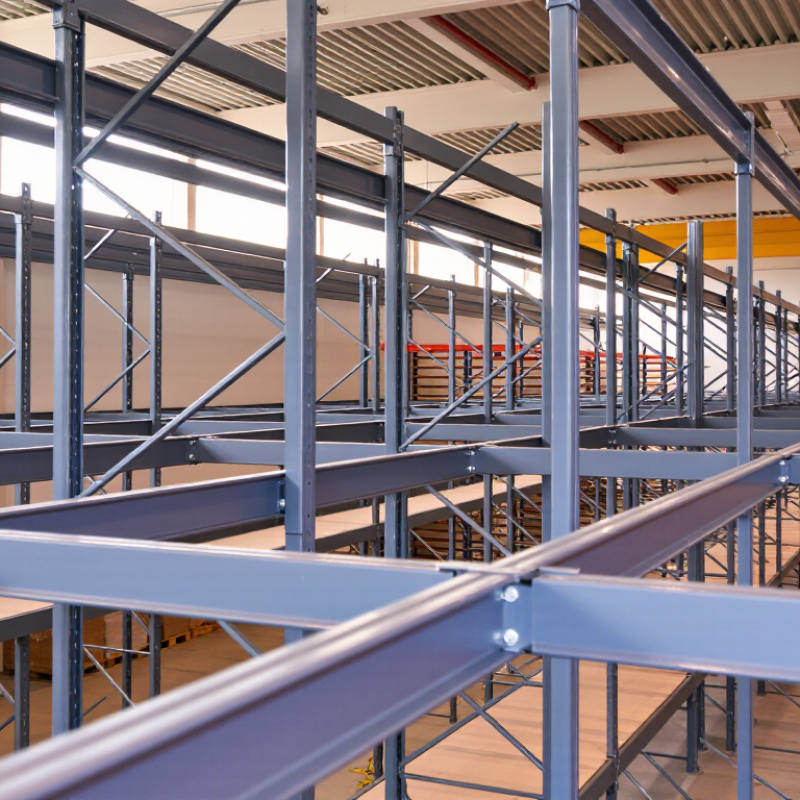
China’s boltless systems manufacturers offer several product types for warehouses, workshops, archives, and retail backrooms. Light-duty boltless shelving commonly uses upright posts, clip-in beams, and adjustable steel panels. It suits cartons, tools, spare parts, and packaged goods. Medium-duty longspan shelving provides deeper levels and stronger beams for heavier containers. Assembly usually requires no nuts or bolts, so one worker can often build a bay with a rubber mallet.
Wire shelving is another practical option. Its open shelves improve airflow and reduce dust collection around stored items. Many suppliers also produce boltless workbenches with laminated, steel, or stainless-steel tops. These support packing, repair, and inspection tasks. Mobile units may include casters and locking brakes, although their safe load capacity needs careful checking. Some factories provide tire racks, archive shelving, and modular storage cabinets using similar slot-in structures.
Details matter more than attractive catalog images. Buyers should request steel thickness, shelf load ratings, beam dimensions, coating specifications, and test records. Load capacity should describe an evenly distributed load, not one heavy box placed in the center. Samples can reveal rough edges, loose clips, or unstable uprights. The powder coating may look excellent, yet poor pretreatment can cause early corrosion. This is easy to overlook. Clear installation drawings and replacement-part support also affect long-term reliability. In my experience, a small tolerance issue can become a frustrating assembly problem across hundreds of bays. Manufacturers that document inspections and accept reasonable design feedback are usually safer partners for global projects.
Quality starts with evidence, not attractive catalog images.
According to the ISO Survey 2022, China held more than 428,000 ISO 9001 certificates. Certification signals process control, but it does not guarantee strong boltless shelving. Ask manufacturers for current certificates, factory scope, and audit dates.
Request steel grade records, coating thickness results, and welding or forming inspection procedures. Load capacity must match the exact beam length, upright profile, and shelf spacing. EN 15512 provides a useful reference for steel static storage systems. A serious supplier should explain testing against relevant requirements.
Visit the production line when possible.
Observe coil storage, roll-forming accuracy, powder-coating coverage, and packaging protection. Measure sample components yourself. Small deviations can create unstable frames after installation.
Request a pilot order before signing a large contract. Check whether drawings, packing lists, and inspection records remain consistent. I would not rely on a perfect sample alone; production batches sometimes reveal weaker control. That uncomfortable detail matters.
Tips:
Compare three suppliers using the same checklist. Ask for third-party load testing linked to your exact configuration. Confirm replacement-part availability and installation guidance.
Review complaint response times, not only promised delivery dates. Keep photographs and dimensional records during inspection. A factory that welcomes reasonable questions is usually easier to manage. But confidence should remain provisional until repeated shipments perform well.
China’s leading boltless systems manufacturers serve warehouses, archives, workshops, and retail storage projects. Material selection affects strength, corrosion resistance, and service life. The World Steel Association reported 1.89 billion tonnes of crude steel production in 2023, showing steel’s continued industrial importance. Cold-rolled steel offers cleaner forming and accurate dimensions. Galvanized steel performs better in humid areas. Particle-board shelves reduce cost, while wire decking improves airflow and visibility.
Manufacturing standards matter more than appearance. Buyers should request material certificates, weld inspection records, coating thickness results, and batch traceability. ISO 9001:2015 supports controlled production processes, but certification alone does not prove rack performance. ANSI/RMI MH16.1 and EN 15635 provide useful guidance for design, inspection, and safe use. Load tests should reflect real shelf spacing and uneven loads. A specification can still fail in practice. Small gaps, bent connectors, or unclear load labels create avoidable risks. Custom options may include bay width, frame height, shelf levels, corner layouts, color, and reinforced beams. Seismic anchoring may also be necessary in certain regions.
Tips: Compare tested load capacity, not advertised capacity. Ask whether the test used the exact frame and shelf combination. Check replacement-part availability before ordering. No coating survives every environment, so match the finish to humidity, chemicals, and cleaning routines. Buyers should also review tolerance limits. Minor dimensional variation may affect assembly, especially in long warehouse rows.
Representative industry ranges for boltless shelving and storage systems commonly offered to global buyers. Actual specifications depend on steel grade, profile design, loading method, testing requirements, and project conditions.
Cold-rolled steel is widely used for indoor frames and shelves, while galvanized steel is selected for improved corrosion resistance. Powder coating is a common finishing option. Typical customization covers bay width, shelf depth, overall height, and shelf load capacity. Buyers should confirm structural calculations and applicable requirements such as EN, FEM, or ANSI/RMI specifications for each project.
China Top Boltless Systems Manufacturers for Global Buyers
Export decisions begin with documentation, not attractive photos. Ask manufacturers for accurate HS codes, commercial invoices, packing lists, and origin statements. Confirm the correct Incoterm and container loading plan before payment. For warehouse systems, request load ratings, material specifications, coating details, and test reports matching the destination market. Compliance requirements vary by country, so independent verification remains valuable. Details matter.
Pricing should include more than the factory quotation. Calculate tooling, export packing, inland transport, customs charges, inspection fees, and possible storage costs. A low unit price can hide expensive replacement parts or weak packaging. In one purchasing review, I underestimated port handling charges and distorted the landed-cost comparison. That mistake was avoidable. Use a written cost model with identical specifications for every supplier.
Supplier selection needs practical evidence. Review production records, quality procedures, welding or forming controls, and recent export experience. Request samples with measured dimensions, not only showroom images. A factory should explain how it handles damaged components and delayed shipments. Check communication speed and technical clarity during a small trial order. Buyers should also confirm production capacity during peak seasons. No supplier is perfect. A documented corrective-action process may matter more than polished sales language.
| Supplier Profile | Typical Manufacturing Focus | Common Production Region | Export Capability | Typical Product Range | Indicative Load Capacity | Typical MOQ | Indicative Lead Time | Indicative Export Price | Compliance and Quality Documents to Request | Best Fit for Global Buyers |
|---|---|---|---|---|---|---|---|---|---|---|
| Profile A High-volume OEM |
Standard boltless shelving, rivet shelving, garage shelving, and warehouse storage units manufactured from roll-formed steel. | Eastern China industrial clusters | Regular container exports; suitable for private-label packaging and repeat purchase programs. | 4–6 shelf units, adjustable frames, chipboard or steel decking, powder-coated finishes. | Approximately 150–350 kg per shelf, depending on span, beam profile, and decking. | Usually 100–300 units per model or one mixed-container order. | 25–45 days after approved drawings, deposit, and material confirmation. | Approximately US$18–55 per unit FOB China for standard medium-duty configurations. | ISO 9001Material test reportCoating testLoad test report | Importers seeking competitive pricing and stable repeat production. |
| Profile B Heavy-duty specialist |
Heavy-duty rivet racks, long-span shelving, industrial workbenches, and high-capacity boltless storage systems. | Central and eastern China steel-processing zones | Experienced in full-container shipments, palletized exports, and industrial project orders. | Heavy-gauge uprights, reinforced beams, steel or wire decks, multi-bay configurations. | Approximately 300–800 kg per shelf when properly configured and tested. | Typically 50–150 units per configuration, subject to tooling and packaging requirements. | 30–60 days, with longer schedules for customized sections or engineering validation. | Approximately US$45–140 per unit FOB China, depending on steel thickness and capacity. | ISO 9001Static load testWelding procedure recordsSteel grade documentation | Industrial distributors, workshops, warehouses, and buyers requiring higher load ratings. |
| Profile C Retail-ready supplier |
Flat-packed boltless shelving designed for home improvement, e-commerce, retail, and do-it-yourself channels. | Southern and eastern China export manufacturing areas | Strong carton optimization, barcode labeling, instruction manuals, and mixed-SKU container loading. | Garage racks, basement shelving, utility racks, pantry units, and compact storage systems. | Approximately 75–250 kg per shelf, depending on product size and deck material. | Often 300–1,000 retail cartons per SKU; lower quantities may be available for stock items. | 20–40 days for standard items; 45–70 days for new packaging or private-label development. | Approximately US$12–40 per retail-packed unit FOB China. | Packaging drop testProduct safety assessmentRoHS review where applicableUser manual | Retail chains, online sellers, and importers requiring shelf-ready packaging. |
| Profile D Project customization |
Made-to-order boltless systems for irregular spaces, mezzanine support areas, archive rooms, and warehouse projects. | Major Chinese metal-fabrication and logistics-equipment regions | Supports technical drawings, container planning, installation guidance, and project-based export documentation. | Custom bay widths, corner units, different shelf heights, access panels, and integrated work surfaces. | Approximately 200–600 kg per shelf, subject to engineering design and test results. | Generally 30–100 units per approved design or project batch. | 35–75 days, including drawing approval, prototype review, and production. | Approximately US$35–120 per unit FOB China; project pricing should be calculated from a bill of materials. | Approved drawingsLoad calculationsInspection planFactory audit | Commercial projects and buyers with non-standard dimensions or site constraints. |
| Profile E Compliance-focused exporter |
Standard and medium-duty boltless shelving supplied with structured quality records and export documentation. | Established export-oriented manufacturing zones in China | Suitable for buyers with formal vendor approval, third-party inspection, and traceability requirements. | Warehouse racks, archive shelving, retail fixtures, and modular storage accessories. | Approximately 100–400 kg per shelf, with capacity stated by tested configuration. | Usually 100–500 units per model, depending on finish and packaging. | 30–55 days after contract confirmation and pre-production inspection. | Approximately US$22–75 per unit FOB China. | ISO 9001Batch traceabilityThird-party inspectionREACH/RoHS reviewPacking list | European, North American, and Australian buyers with documented supplier-approval procedures. |
| Profile F Value-oriented factory |
Entry-level boltless racks using standard profiles, basic powder coating, and economical packaging. | Cost-competitive inland and coastal manufacturing areas | Suitable for price-sensitive importers and standard full-container orders. | Light-duty shelving, small storage racks, utility stands, and basic modular units. | Approximately 50–180 kg per shelf, depending on dimensions and loading method. | Commonly 300–1,000 units per model or one full-container order. | 25–50 days for standard designs. | Approximately US$10–32 per unit FOB China. | Basic load testCoating thickness recordPre-shipment inspectionCarton specification | Distributors and importers prioritizing landed-cost efficiency over extensive customization. |
They use uprights, beams, shelves, and clip-in connectors. Assembly needs only light hand tools. No traditional nuts and bolts.
They support flat-pack shipping and faster installation. Shelf heights can change when cartons or bins change. This helps growing warehouses.
No. Buyers must verify load ratings, steel thickness, beam deflection, and testing documents. Easy assembly does not mean unlimited capacity.
Cold-rolled steel offers accurate dimensions. Galvanized steel suits humid areas better. Particle-board shelves reduce cost, while wire shelves improve airflow.
Ask for drawings, material certificates, inspection records, coating results, and batch traceability. Request tests using the exact shelf configuration.
Check bay width, frame height, shelf levels, corner layouts, colors, and reinforced beams. Seismic anchoring may be needed in some regions.
Poor floor leveling can cause instability. Uneven loading and repeated overloading create additional risk. Small gaps may affect long warehouse rows.
Include tooling, export packing, inland transport, customs charges, inspection fees, and storage costs. A low unit price can hide expensive replacements.
Request measured samples, production records, quality procedures, and recent export evidence. Review communication during a small trial order.
I once underestimated port handling charges. It distorted the landed-cost comparison. A written model with identical specifications would have prevented it.
Boltless Systems are modular storage and display solutions designed for fast assembly without traditional bolts, making them attractive to global buyers seeking efficiency, flexibility, and reduced installation costs. China’s manufacturers commonly supply boltless shelving, warehouse racks, retail displays, workbenches, and adjustable storage units for offices, workshops, logistics facilities, and commercial environments. Their product ranges may support different load capacities, sizes, finishes, and layout requirements.
When evaluating a Chinese manufacturer, buyers should review material quality, structural design, production consistency, inspection procedures, and experience with international orders. Important considerations include steel grade, surface treatment, manufacturing standards, packaging, customization capabilities, and the availability of samples or technical drawings. Buyers should also confirm export documentation, product compliance with destination-market requirements, delivery schedules, payment terms, warranty policies, and after-sales support. Comparing total cost rather than unit price alone can help identify a reliable supplier that offers durable products, clear communication, stable quality, and practical long-term value.

GuciRack