What Are the Top China Carton Flow Storage Manufacturers?

Time:2026-10-26 Author:Oliver
0%

Choosing the right Carton Flow Storage manufacturer in China requires more than comparing prices or catalog images. It demands a close look at engineering, material quality, production control, and after-sales support. China has many capable suppliers, but their strengths are not identical.

Some focus on heavy-duty warehouse racking. Others specialize in carton live lanes, roller tracks, picking modules, or customized order-picking systems. The difference appears in small details: smooth roller movement, stable lane dividers, accurate frame alignment, and easy replenishment access. These details affect every picking shift.

Brian Neuwirth, a long-time carton-flow specialist and former UNEX executive, describes the operating principle clearly: “Carton flow puts the product in the hands of the picker, not the picker in search of the product.”

That principle matters.

This article examines leading China Carton Flow Storage manufacturers through a practical lens. It considers product design, load capacity, component durability, customization, installation experience, and service responsiveness. It also asks harder questions. Does the supplier understand your SKU dimensions? Can its lanes handle uneven carton weights? Are replacement rollers easy to obtain?

A polished factory website proves very little. A warehouse trial proves more.

The strongest manufacturers usually provide drawings, load calculations, sample testing, and clear project references. Still, no supplier is perfect. Even experienced manufacturers may overlook replenishment speed, operator reach, or future product changes. Buyers should challenge assumptions before signing an order.

The goal is not to identify the cheapest factory. It is to identify the manufacturer that can support reliable flow, safer picking, and measurable warehouse performance.
What Are the Top China Carton Flow Storage Manufacturers?

Definition and Role of Carton Flow Storage Systems in China

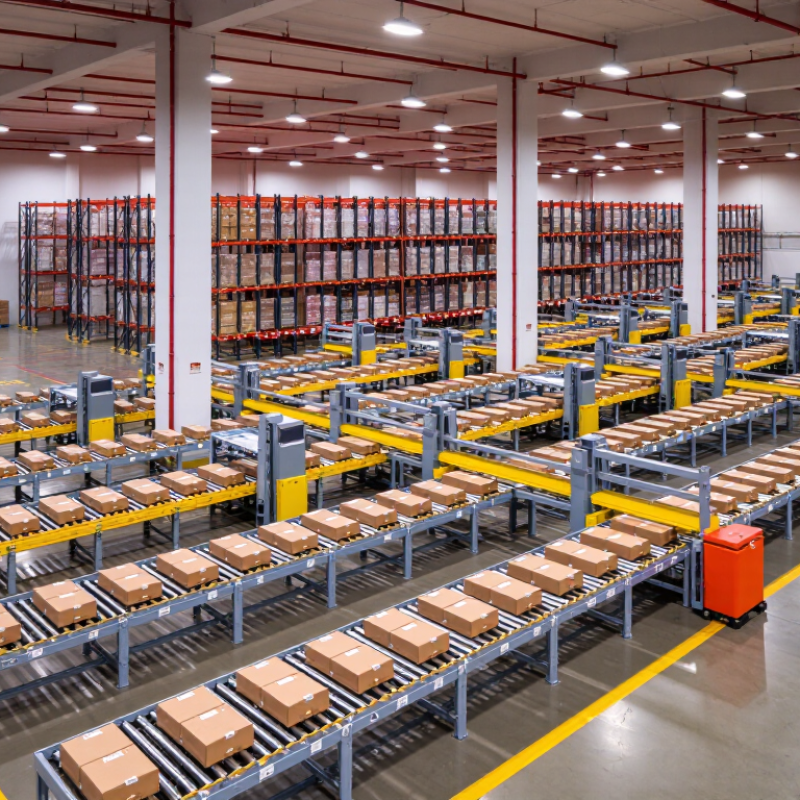
Carton flow storage systems are gravity-assisted rack units designed for cartons, totes, and small containers. They use inclined roller tracks to move goods from the loading side to the picking side. Workers load cartons from the rear and pick them from the front. This arrangement supports a practical first-in, first-out workflow. In China, these systems serve distribution centers, factories, and retail warehouses. Their role extends beyond storage. They organize product movement, reduce reaching, and improve picking visibility. A well-designed lane can shorten walking distances and support consistent order handling. Small details matter.

Experienced warehouse planners assess carton size, weight, turnover, and replenishment methods before selecting equipment. Steel frames need stable foundations and suitable load ratings. Rollers must match carton surfaces and operating conditions. Dividers keep products aligned, while stop bars reduce accidental movement. When comparing China carton flow storage manufacturers, buyers should review testing records, load calculations, installation support, and maintenance guidance. No system fits every operation. I have seen efficient-looking layouts create bottlenecks near dispatch. That weakness deserves honest testing. Trial lanes and real cartons reveal more than attractive drawings.

Tips: Reserve flow lanes for stable carton sizes. Place fast-moving items near comfortable picking heights. Measure replenishment time, pick accuracy, and worker movement after installation. Inspect rollers regularly. Even a minor jam can disrupt an entire lane.

Key Criteria for Evaluating Chinese Carton Flow Manufacturers

What Are the Top China Carton Flow Storage Manufacturers?

Key Criteria for Evaluating Chinese Carton Flow Manufacturers

Choosing a Chinese carton flow manufacturer requires more than comparing prices. Start with product knowledge and practical evidence. A reliable supplier should explain roller spacing, lane width, frame strength, and loading limits clearly. Ask for drawings, material specifications, and test records. Vague answers deserve caution.

Evaluate how the system fits your operation. Measure carton dimensions, weight variation, picking frequency, and replenishment methods. A good design should support smooth carton movement without sudden stops. Inspect the roller finish, side guides, dividers, and adjustable supports. Ask whether the structure suits cold rooms, humid areas, or dusty warehouses. Manufacturing consistency also matters. Check welding quality, coating thickness, dimensional accuracy, and packaging protection. Request samples or visit a production facility when possible. Photos alone can mislead.

Tips: Ask for customer references from similar warehouses. Confirm installation guidance, spare-part availability, and response times. Review warranty terms in writing. A factory may offer an attractive quotation, yet weak after-sales support can increase downtime. Certification is useful, but it should match the actual product and application. Do not rely on documents without verification. No evaluation is perfect. Even experienced buyers can overlook maintenance access or future expansion needs. A small pilot test may reveal problems before a full purchase.

Leading China Carton Flow Storage Manufacturers and Their Strengths

China carton flow storage manufacturers increasingly serve e-commerce, retail, automotive, and cold-chain warehouses. Their main strengths include modular engineering, flexible customization, and efficient steel fabrication. Many suppliers produce gravity lanes with roller tracks, dividers, replenishment stops, and clear pick labels. These systems support FIFO handling and improve carton visibility.

The Material Handling Industry’s 2024 Annual Industry Report states that 55% of supply chain professionals plan to increase technology investment. That pressure makes scalable flow storage increasingly practical.

Leading Chinese manufacturers differ in important ways. Some specialize in dense, high-load frames for industrial parts. Others focus on lightweight lanes for cartons, totes, and store replenishment.

Strong suppliers often provide CAD layouts, load testing, sample lanes, and installation guidance. More experienced teams can integrate flow racks with conveyors, pick-to-light systems, and warehouse software.

A 2024 warehouse automation trends report also identifies robotics and automated handling as major growth areas. Yet published capacity figures may be inconsistent. Buyers should verify testing methods, not trust attractive catalog claims. Small design errors can cause carton jams.

Tips: Ask for lane load, roller pitch, slope range, and brake performance in writing. Test heavy, light, and slightly damaged cartons. Request references from similar warehouses. Compare total cost, not only rack price. Check corrosion protection for humid rooms. Leave adjustment slots; real cartons rarely behave perfectly.

Product Types, Customization Options, and Industry Applications

What Are the Top China Carton Flow Storage Manufacturers?

China carton flow storage manufacturers typically offer carton flow racks, gravity roller shelves, picking bins, and FIFO storage systems. These products support organized item movement through inclined rollers or wheels. Carton flow racks suit fast-moving products, while adjustable shelving handles mixed carton sizes. Heavy-duty versions can support denser loads in manufacturing and distribution centers.

Customization usually includes rack height, bay width, roller spacing, frame color, load capacity, and safety accessories. Experienced manufacturers should review carton dimensions, picking frequency, floor conditions, and handling equipment before proposing a design. A practical layout may include replenishment from the rear and picking from the front. That detail reduces unnecessary walking. However, poor carton weight estimates can create jams or unstable movement. This mistake deserves attention.

Tips: Test sample cartons before mass production. Check roller resistance, label visibility, frame tolerance, and access clearance. Request load calculations, assembly instructions, inspection records, and replacement-part support. Do not judge quality from price alone.

These systems appear in e-commerce warehouses, automotive parts storage, food packaging, electronics distribution, and controlled healthcare supply areas. Each application needs different hygiene, corrosion, temperature, or traceability considerations. For example, food-related operations may require easy-clean surfaces, while spare-parts warehouses often need stronger dividers and deeper lanes. Reliable suppliers should explain these tradeoffs clearly and provide drawings for approval. A visually neat rack is not automatically an efficient one.

How to Select the Right China Carton Flow Storage Manufacturer

Selecting the right China carton flow storage manufacturer starts with your operation, not a catalog. Measure carton dimensions, load weights, SKU turnover, and available aisle space. A supplier should translate these details into roller pitch, frame depth, rack height, and replenishment access. Ask for drawings before discussing price. Small errors matter. A 50-millimeter clearance mistake can create jams, damaged cartons, and slower picking during peak shifts. Request samples or a pilot bay when possible.

Evaluate manufacturing experience through evidence. Look for documented projects in warehouses with similar carton sizes and picking volumes. Ask how the manufacturer tests rollers, welding points, load ratings, and surface coatings. Clear inspection records are more useful than broad promises. Confirm whether engineers can adjust lane angles and guide rails after site measurements. Experienced teams usually explain trade-offs plainly. That is reassuring.

Reliability also depends on communication and after-sales support. Check response times, spare-part availability, installation instructions, and remote troubleshooting procedures. A dependable manufacturer should provide packing lists, assembly drawings, maintenance schedules, and realistic delivery dates. Verify certifications and export documents relevant to your destination, rather than accepting copied files. Speak with recent customers when possible. One weakness deserves attention: a low quote may exclude installation, testing, or replacement rollers. Compare the complete lifecycle cost, then challenge every unclear assumption before signing.

FAQS

What is a carton flow storage system?

It is a gravity-assisted rack with inclined rollers. Cartons move from loading space to picking space.

How does the system support stock rotation?

Workers load cartons at the rear and pick them from the front. This supports a practical first-in, first-out workflow.

Which warehouse operations can use carton flow storage?

Distribution centers, factories, and retail warehouses can use it. It suits cartons, totes, and small containers.

What information should buyers provide before requesting a design?

Share carton sizes, weights, turnover rates, and replenishment methods. Include picking frequency and expected future growth.

How can buyers evaluate a manufacturer fairly?

Request drawings, material specifications, load calculations, and testing records. Vague answers deserve caution.

Which physical details require close inspection?

Check roller spacing, lane width, side guides, dividers, and stop bars. Also inspect welding, coating, and dimensional accuracy.

Can carton flow racks work in difficult warehouse environments?

They may suit cold, humid, or dusty areas when correctly specified. Ask about materials and operating conditions before ordering.

Why is a pilot lane useful before full installation?

A trial lane uses real cartons and reveals jams, poor alignment, or dispatch bottlenecks. Drawings alone can mislead.

What maintenance practices help keep the lanes reliable?

Inspect rollers regularly and remove anything blocking movement. Even a minor jam can affect an entire lane.

What support should buyers confirm after purchase?

Confirm installation guidance, spare-part availability, response times, and written warranty terms. Attractive pricing may hide weak support.

Conclusion

Carton Flow Storage systems are designed to improve picking efficiency, product visibility, and inventory rotation by using inclined roller lanes that move cartons toward the picking side. In China, manufacturers serve a wide range of logistics, retail, manufacturing, and distribution needs, offering solutions that support faster order fulfillment and better use of warehouse space. When evaluating suppliers, buyers should consider product quality, load capacity, material durability, manufacturing expertise, safety features, delivery reliability, technical support, and overall cost performance.

Leading Chinese manufacturers typically provide multiple product configurations, including gravity flow racks, carton flow shelves, modular picking units, and integrated warehouse storage solutions. Customization may cover dimensions, lane layouts, roller types, frame structures, load requirements, and compatibility with existing systems. To select the right manufacturer, companies should clearly assess storage goals, product characteristics, warehouse conditions, budget, installation requirements, and after-sales service. A careful comparison of technical capabilities and project experience can help ensure that the chosen Carton Flow Storage solution is efficient, durable, flexible, and suitable for long-term operational needs.

Oliver

Oliver

Oliver is a seasoned marketing professional with a wealth of expertise in driving brand awareness and engagement. With a deep understanding of our company's product offerings, he consistently delivers high-quality content that enriches our professional blog. His insights not only shed light on......