Who Are the Top Stacking Systems Manufacturers in China?

Time:2026-11-02 Author:Mason
0%

China has become an important source of equipment for warehouses, factories, and distribution centers. Its manufacturers offer a wide range of Stacking Systems, from straightforward pallet-handling machines to automated solutions linked with conveyors and warehouse software. But a polished product page does not prove a system will suit a particular site. Details matter.

This guide explores how to identify leading Chinese manufacturers and compare their capabilities. It considers system design, load capacity, cycle rates, control technology, installation support, and spare-parts availability. Buyers should also check whether equipment matches their pallet sizes, aisle widths, ceiling heights, and daily operating patterns. A compact demo unit may look convincing, yet full-scale performance can differ. Ask for project references and test results where available.

“Top” depends on the application. A supplier experienced in high-throughput distribution may not be the best fit for a smaller production facility. Reliable evaluation means looking beyond price and stated specifications. Review technical documents, confirm service arrangements, and clarify what commissioning includes. Proof matters.

No single list can capture every factory’s strengths or every buyer’s needs. Public information may also be incomplete, and product ranges can change. The following overview offers a practical starting point, not a substitute for site assessment or direct verification. With clear requirements and careful questions, readers can build a more balanced shortlist of Chinese Stacking Systems manufacturers.
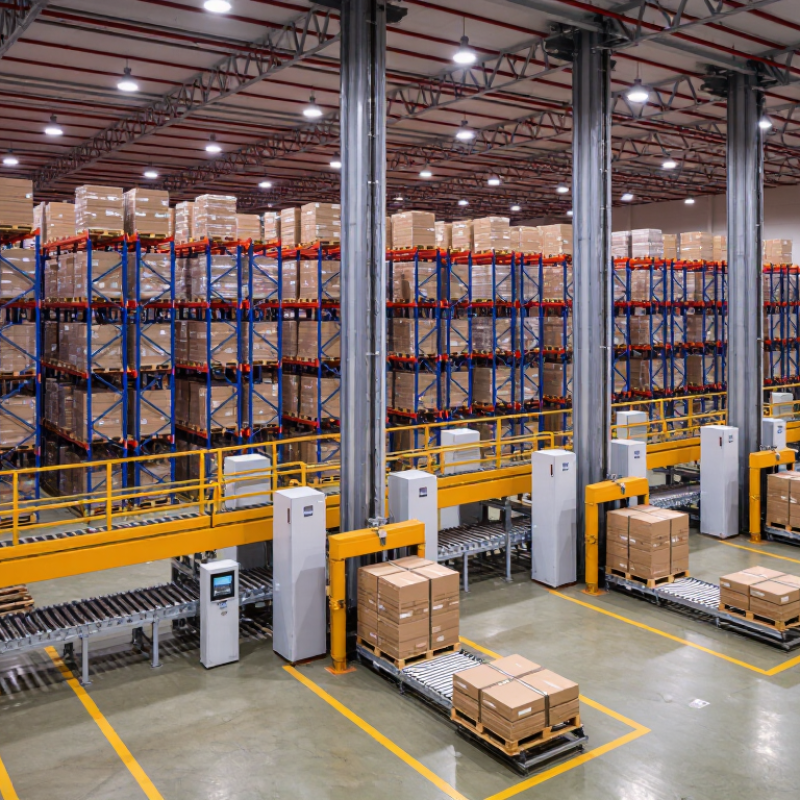
Who Are the Top Stacking Systems Manufacturers in China?

What Are Stacking Systems? Types, Functions, and Warehouse Applications

Stacking systems are equipment and controls that lift, position, and store goods vertically. They help warehouses use floor space efficiently while keeping pallets or cartons accessible. The right setup depends on load weight, aisle width, storage height, and how often items move.

Common types include walk-behind electric stackers, forklift-style stackers, and automated stacker cranes used in high-bay storage. Electric stackers suit shorter travel distances and moderate loads. Stacker cranes run along fixed aisles and place unit loads into storage locations with repeatable precision. Some facilities also use robotic equipment to build or rearrange pallet stacks. Small differences matter.

These systems support receiving, replenishment, order picking, and dispatch. For example, an operator may lift a pallet from floor level and place it on a rack, while a crane retrieves another pallet for production. Sensors, load limits, and clear operating procedures help reduce collision and dropped-load risks. Selection should account for floor flatness, pallet condition, maintenance access, and staff training—not just rated capacity. A layout drawing can still miss awkward turning points or uneven traffic near a loading bay. Real operating trials often reveal those details.

China’s 2023 Total Social Logistics Value: RMB 352.4 Trillion (CFLP)

China’s total social logistics value reached RMB 352.4 trillion in 2023, up 5.2% year on year, according to the China Federation of Logistics and Purchasing (CFLP). This measures the value of goods moved, not warehouse equipment sales. Still, it shows the scale of the flow that storage and handling systems must support. In a busy distribution center, that can mean pallets arriving while outbound orders are already queuing.

For buyers comparing stacking-system manufacturers in China, national logistics figures are context, not a supplier scorecard. The National Bureau of Statistics reported that manufacturing value added grew 5.0% in 2023. More production can raise pressure on storage capacity, retrieval speed, and warehouse space. But growth does not automatically justify automation. A system designed for steady pallet flows may struggle with irregular loads or frequent layout changes.

Check practical details: rated load, aisle width, lift height, retrieval cycle, and performance under peak demand. Ask for operating data from installations with similar goods and shift patterns. That distinction matters. Published specifications rarely show maintenance delays or awkward product dimensions. CFLP’s figures establish a large logistics environment; site-level evidence is still needed to judge which system fits.

Who Are the Top Stacking Systems Manufacturers in China? - China’s 2023 Total Social Logistics Value: RMB 352.4 Trillion (CFLP)

Verified 2023 logistics and commerce indicators provide market context for evaluating stacking-system suppliers. The figures below do not rank individual manufacturers.

Indicator 2023 Figure Relevance to Stacking Systems Source
Total social logistics value RMB 352.4 trillion; up 5.2% year over year Indicates the scale and growth of logistics activity that warehouses and material-handling systems support. China Federation of Logistics & Purchasing (CFLP)
Total social logistics costs RMB 18.2 trillion; up 2.3% year over year Cost pressure can make storage density, labor requirements, and system operating costs important supplier-evaluation factors. CFLP
Social logistics costs as a share of GDP 14.4%; down 0.3 percentage points from 2022 A broad efficiency benchmark for assessing how warehouse automation may contribute to logistics-cost control. CFLP
Online retail sales RMB 15.4 trillion; up 11.0% year over year Growth in online retail can increase the importance of storage capacity, picking support, and order-fulfillment flexibility. National Bureau of Statistics of China (NBS)
Online retail sales of physical goods RMB 13.0 trillion; up 8.4% year over year Provides context for evaluating system suitability across high-volume goods storage and distribution operations. NBS
China’s goods imports and exports RMB 41.76 trillion; up 0.2% year over year Trade volume is relevant when assessing warehouse systems serving manufacturing, ports, and cross-border supply chains. General Administration of Customs of China

Note: Market indicators are reported figures; the supplier-related comments are general interpretations, not measured outcomes or manufacturer rankings.

Who Are China’s Leading Stacking-System Manufacturers and What Do They Build?

China’s leading stacking-system manufacturers include specialist machinery builders, warehouse automation integrators, and material-handling equipment makers. They design systems for cartons, sacks, sheets, and palletized goods. The category is not perfectly tidy. Some suppliers make complete lines; others provide only the stacking station and controls.

Typical equipment includes robotic palletizing cells, layer-forming machines, pallet stackers, and depalletizers. A carton line may use conveyor belts, photoelectric sensors, and a programmable controller to position each case. A robotic arm then places cases in a preset pattern. For heavier loads, manufacturers may add guarded work areas, lifting platforms, and automatic pallet dispensers. Small details matter.

Experienced suppliers usually adapt equipment to product dimensions, production speed, floor space, and packaging strength. They may test sample products before confirming a gripper or stacking pattern. Buyers should ask for rated cycle times, load limits, changeover procedures, and maintenance access. A fast quoted speed can be misleading if it excludes pauses for pallet changes. Specifications deserve scrutiny. Some projects still depend on manual adjustments, especially when package sizes vary, so the promised level of automation should be checked against real operating conditions.

How Do Racking and AS/RS Systems Compare in Capacity and Throughput?

Racking and automated storage and retrieval systems solve different capacity problems. Conventional pallet racking stores goods in accessible bays, with capacity shaped by building height, aisle width, beam levels, and rated load limits. It can be expanded in stages. A forklift operator can reach a specific pallet directly. That flexibility often suits facilities with varied stock and changing pick patterns. But wide aisles consume floor space. Busy periods can also create forklift queues.

AS/RS equipment uses cranes, shuttles, or lifts to move loads through compact storage lanes. By reducing aisle space and using building height, it can increase storage density within the same footprint. Throughput depends on more than machine speed. Inbound and outbound stations, lift access, software scheduling, and the number of simultaneous orders all matter. Small bottlenecks add up. A fast crane cannot compensate for a congested handoff point. The comparison is not always tidy: racking may move pallets quickly for scattered picks, while AS/RS can perform steadily with predictable, concentrated flows. Capacity estimates can disappoint when real inventory mixes differ from planning assumptions. Review peak-hour order lines, pallet dimensions, load weights, and replenishment frequency before choosing. Have a qualified engineer verify clearances, floor conditions, and storage loads.

Which Standards and Performance Metrics Help Verify Manufacturer Claims?

For Chinese stacker-crane and automated-storage suppliers, certificates are only the first filter. Check that each standard matches the equipment. EN 528 covers rail-dependent storage and retrieval equipment, while ISO 3691-4 addresses driverless industrial trucks. ISO 13849-1 helps assess safety-related control systems. A certificate is not a cycle-time guarantee.

MHI and Deloitte’s 2024 Annual Industry Report found that 55% of surveyed supply-chain professionals planned to adopt robotics and automation within five years. That figure shows strong interest, not verified performance by any supplier. Ask manufacturers to define throughput in pallets per hour, positioning accuracy, availability, and energy use. Then check the test conditions: load weight, storage height, aisle layout, and operating hours. Small changes matter.

Request factory and site acceptance test records, not just a polished demonstration. Compare repeated runs with the same pallet dimensions and load. Confirm whether availability excludes planned maintenance and upstream conveyor delays. ISO compliance supports a safety review, but it does not prove the system fits a particular warehouse. I would still question unusually high throughput claims if the supplier cannot share raw test logs and explain the calculation.

FAQS

What is a stacking system?

It lifts, positions, and stores goods vertically. A pallet can move from floor level to a rack.

What types are used in warehouses?

Common options include walk-behind electric stackers, forklift-style stackers, and automated cranes that travel along fixed aisles. Some sites also use robots to build or rearrange pallet stacks.

How do warehouses choose the right system?

Consider load weight, aisle width, storage height, and how often goods move. Floor flatness, pallet condition, maintenance access, and staff training matter too. Capacity alone is not enough.

What warehouse tasks do stackers support?

They can help with receiving, replenishment, order picking, and dispatch. For example, a crane may retrieve a pallet for production while an operator places another on a rack.

Which performance figures should buyers request?

Ask for throughput in pallets per hour, positioning accuracy, availability, and energy use. Check the load weight, aisle layout, storage height, and operating hours behind each figure.

How can performance claims be checked?

Request factory and site acceptance test records, plus raw logs when available. Compare repeated runs using the same pallet dimensions and load. A polished demonstration is not enough.

What can affect real-world performance?

Planned maintenance and conveyor delays can change reported availability. Turning points and busy loading-bay traffic may also slow movement. Small details matter.

Do certificates prove a system will fit a warehouse?

No. Relevant safety standards can support a review, but they do not guarantee site performance. I might be too cautious, yet unusually high throughput claims deserve questions when test details are missing.

Conclusion

Stacking Systems are designed to organize, store, and retrieve goods efficiently in warehouses and distribution centers. Depending on operational needs, solutions may include conventional racking, automated storage and retrieval systems (AS/RS), and other mechanized or high-density storage arrangements. China’s logistics activity provides important context for this market: the China Federation of Logistics and Purchasing reported a 2023 total social logistics value of RMB 352.4 trillion. Manufacturers in China build a range of storage structures and automation components to support different facility layouts, inventory profiles, and handling requirements.

Choosing a system involves comparing usable storage capacity, retrieval speed, throughput, space utilization, and compatibility with warehouse operations. Racking can offer flexible access to stored goods, while AS/RS can automate storage and retrieval and support higher-density workflows. To assess manufacturer claims, buyers can examine relevant design and safety standards, documented performance data, load ratings, retrieval-cycle times, system availability, and testing methods. Evaluating these measures against a warehouse’s actual operating needs helps identify a practical solution rather than relying on headline specifications alone.

Mason

Mason

Mason is a seasoned marketing professional with a deep expertise in the company's offerings and a passion for driving brand awareness. With a strong background in digital marketing strategies, he has an innate ability to connect with diverse audiences and effectively communicate product benefits.......